

cold wallet vs hot wallet, hot vs cold wallet, cold vs hot wallet, crypto cold wallet vs hot wallet, cold and hot wallets, difference between cold and hot wallet, hot storage vs cold storage crypto
Hot vs Cold Wallets Explained
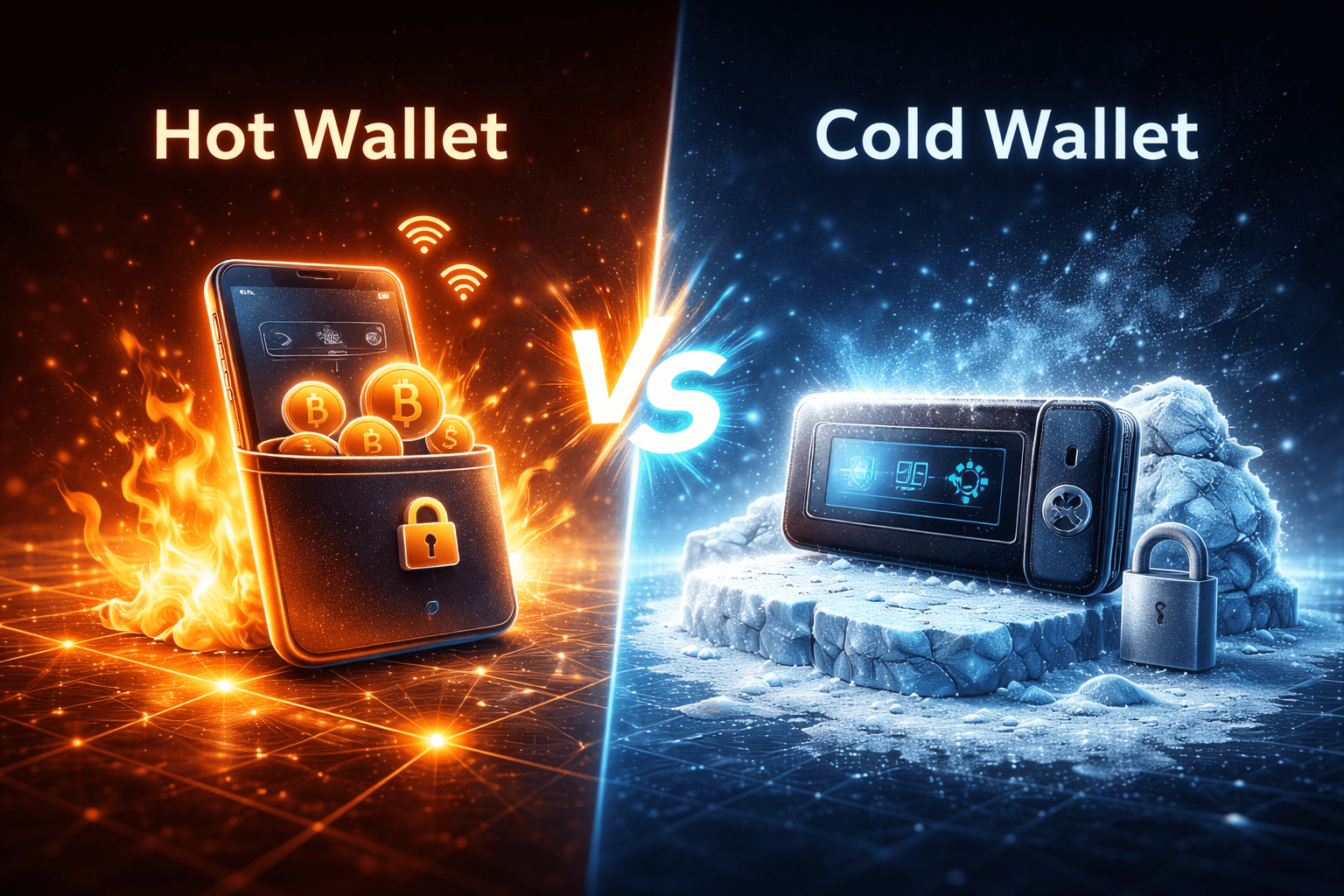
Hot vs Cold Wallets Explained: What’s the Difference?
Choosing between a cold wallet vs hot wallet is one of the most important decisions crypto users make. The difference between cold and hot wallets affects how secure your assets are, how quickly you can access them, and how you manage risk over time.
At a high level, hot wallets are connected to the internet and designed for convenience, while cold wallets keep your crypto offline for stronger security. Most experienced users rely on both cold and hot wallets to balance accessibility and protection.
This guide explains hot vs cold wallets, how they work, their pros and cons, and how to choose the right setup for your needs.
Key Takeaways
Crypto wallets store private keys, not the cryptocurrency itself.
Hot wallets are online, fast, and convenient but more exposed to cyber risks.
Cold wallets keep keys offline, making them safer for long-term storage.
The best setup often combines hot storage vs cold storage crypto strategies.
Your ideal wallet choice depends on transaction frequency, asset size, and risk tolerance.
What Is a Crypto Wallet?
A cryptocurrency wallet is a tool that stores your private keys, which prove ownership of digital assets on the blockchain. Crypto itself is not stored inside the wallet. It exists on the blockchain. The wallet simply gives you the ability to access and move those assets.
Think of a wallet like a keychain:
The blockchain is the vault
Your private keys unlock access
The wallet holds and manages those keys
This is why wallet security matters so much. If someone gains access to your private keys, they control your crypto, regardless of whether you use a hot or cold wallet.
Hot Wallets Explained
A hot wallet is a crypto wallet that stays connected to the internet. These wallets are typically software-based and are installed as mobile apps, desktop programs, browser extensions, or exchange wallets.
Hot wallets are designed for frequent use. Their constant internet connection allows users to send, receive, trade, and interact with decentralized applications quickly.
However, this connectivity also increases exposure to risks like hacking, malware, and phishing attacks.
Types of Hot Wallets
Common hot wallet types include:
Mobile wallets (smartphone apps)
Desktop wallets (installed on computers)
Web wallets (browser-based or exchange-hosted)
Browser extension wallets used for DeFi and NFTs
Each type serves a similar function but varies in usability, supported blockchains, and security features.
Pros and Cons of Hot Wallets
Pros
Fast access to funds
Easy to use and beginner-friendly
Ideal for trading and daily transactions
Usually free
Cons
Higher exposure to online attacks
Vulnerable to phishing and malware
Less suitable for storing large balances long-term
Cold Wallets Explained
A cold wallet stores private keys offline, meaning it is not connected to the internet during normal use. Because hackers cannot access something that isn’t online, cold wallets are widely considered the most secure way to store crypto.
Cold wallets are typically physical devices or offline methods designed for long-term storage rather than daily spending.
Types of Cold Wallets
Common cold wallet options include:
Hardware wallets (USB-like devices)
Air-gapped wallets that never connect to the internet
Paper wallets with printed keys or QR codes
Deep cold storage, such as storing hardware wallets in safes or vaults
Pros and Cons of Cold Wallets
Pros
Strong protection from online threats
Ideal for long-term holding and large balances
Reduced attack surface
Cons
Less convenient for frequent transactions
Can be lost, stolen, or damaged
Usually cost between $50 and $200
Cold wallets prioritize security over speed, making them a core component of responsible crypto storage.
Hot vs Cold Wallets: Side-by-Side Comparison
Feature | Hot Wallet | Cold Wallet |
|---|---|---|
Connectivity | Always online | Offline by default |
Best Use Case | Frequent transactions | Long-term storage |
Security | More vulnerable to cyber threats | Highly resistant to hacking |
Convenience | Fast and easy access | Slower, requires extra steps |
Cost | Usually free | Typically paid hardware |
Risk Profile | Higher | Lower |
This comparison highlights the fundamental difference between cold and hot wallets: convenience versus security.
How to Choose Between Hot and Cold Wallets
When deciding between a crypto cold wallet vs hot wallet, consider:
How often you transact
How much crypto you hold
Your comfort with security management
Your risk tolerance
There isn’t a universally “best” option here. The right setup depends on how often you transact and how much risk you’re willing to manage. If you move crypto frequently, a hot wallet is practical. If you are holding assets long-term, cold storage provides peace of mind.
Best Practices for Crypto Wallet Security
Regardless of wallet type:
Back up your seed phrase and store it securely
Use strong passwords and multi-factor authentication
Avoid storing large balances on exchanges
Be cautious of phishing attempts and fake apps
Keep software and firmware updated
Security habits matter as much as wallet choice.
Can You Use Hot and Cold Wallets Together?
Yes, and most experienced users do.
Using cold and hot wallets together creates a two-layer system:
A hot wallet for daily activity and small balances
A cold wallet for long-term holdings
This approach mirrors a checking and savings account model and is widely considered best practice.
Hot vs Cold Wallets: Which Is Best for You?
Frequent traders benefit from hot wallets
Long-term investors benefit from cold wallets
Large portfolios should prioritize cold storage
Most users benefit from a hybrid setup
There is no single “best” wallet. The right choice depends on how you use crypto.
Frequently Asked Questions
Are cold wallets safer than hot wallets?
Yes, in terms of online security. Cold wallets are offline, which greatly reduces hacking risk. However, they can still be lost or damaged.
Is an exchange wallet hot or cold?
Most exchange wallets are hot wallets, though some platforms use cold storage behind the scenes.
Do I need both a hot and a cold wallet?
Not always, but using both offers the best balance of security and convenience.
Can hot wallets be secure?
Yes, when paired with strong passwords, multi-factor authentication, and good security practices.
What happens if I lose my cold wallet?
If you have your seed phrase backed up, you can recover your funds on a new wallet.
Final Thoughts: Hot vs Cold Wallets Explained
Understanding hot vs cold wallet differences is essential for protecting your crypto. Hot wallets offer speed and ease of use, while cold wallets deliver stronger security through offline storage.
For most people, the smartest approach isn’t choosing one over the other. It’s using both together. By combining hot storage vs cold storage crypto strategies, you can stay flexible without sacrificing safety.




Get updates in your inbox
Get exclusive insights, actionable strategies, and ideas delivered straight to your inbox.