

what is a crypto wallet test, how does a crypto wallet work, types of crypto wallets, crypto wallet types
What Is a Crypto Wallet?

What is a crypto wallet?
A crypto wallet is a tool that allows you to store, send, receive, and manage cryptocurrencies like Bitcoin and Ethereum. Rather than holding physical money or digital coins themselves, a crypto wallet stores the cryptographic keys that prove your ownership of assets on the blockchain.
For many people, this shift from familiar accounts and passwords to private keys is where crypto starts to feel confusing. Wallets introduce real ownership, but they also introduce new responsibility, which is why understanding how they work matters more than memorizing terminology.
If you’ve ever wondered how people actually control their crypto, or why it feels so different from money in a bank, it usually comes down to wallets.
What Is a Crypto Wallet and Why It Matters
At its core, a crypto wallet is your gateway to the blockchain. It lets you interact with decentralized networks by proving that you own specific digital assets.
Crypto wallets matter because:
They give you ownership: Whoever controls the private keys controls the crypto.
They enable transactions: Sending and receiving crypto requires a wallet.
They affect security: Wallet type determines how exposed your assets are to hacks or loss.
They unlock Web3 access: Wallets are required for DeFi, NFTs, and decentralized apps (dApps).
Unlike a traditional bank account, a crypto wallet can allow you to hold assets without relying on a central authority, depending on the wallet type you choose.
How Do Crypto Wallets Work?
Crypto wallets work by managing cryptographic keys and interacting with blockchain networks. When you use a wallet, you’re not moving coins around like files – you’re authorizing changes to the blockchain ledger.
Public Keys vs. Private Keys
Every crypto wallet is built around two key components:
Public key: This is similar to an account number. You can safely share it with others so they can send you crypto.
Private key: This is like a password combined with a signature. It proves ownership and authorizes transactions.
Anyone with access to your private key can control your funds.
Your wallet’s main job is to securely store private keys and use them to sign transactions when needed.
What Happens When You Send or Receive Crypto
When you send crypto:
You enter the recipient’s public address.
Your wallet creates a transaction request.
The transaction is signed using your private key.
The signed transaction is broadcast to the blockchain.
Miners or validators confirm it and add it to the ledger.
When you receive crypto, the blockchain records that funds associated with your public address now belong to you – no action required beyond sharing your address.
Types of Crypto Wallets Explained
Not all crypto wallets are the same. The biggest differences come down to who controls the keys and how the wallet connects to the internet.
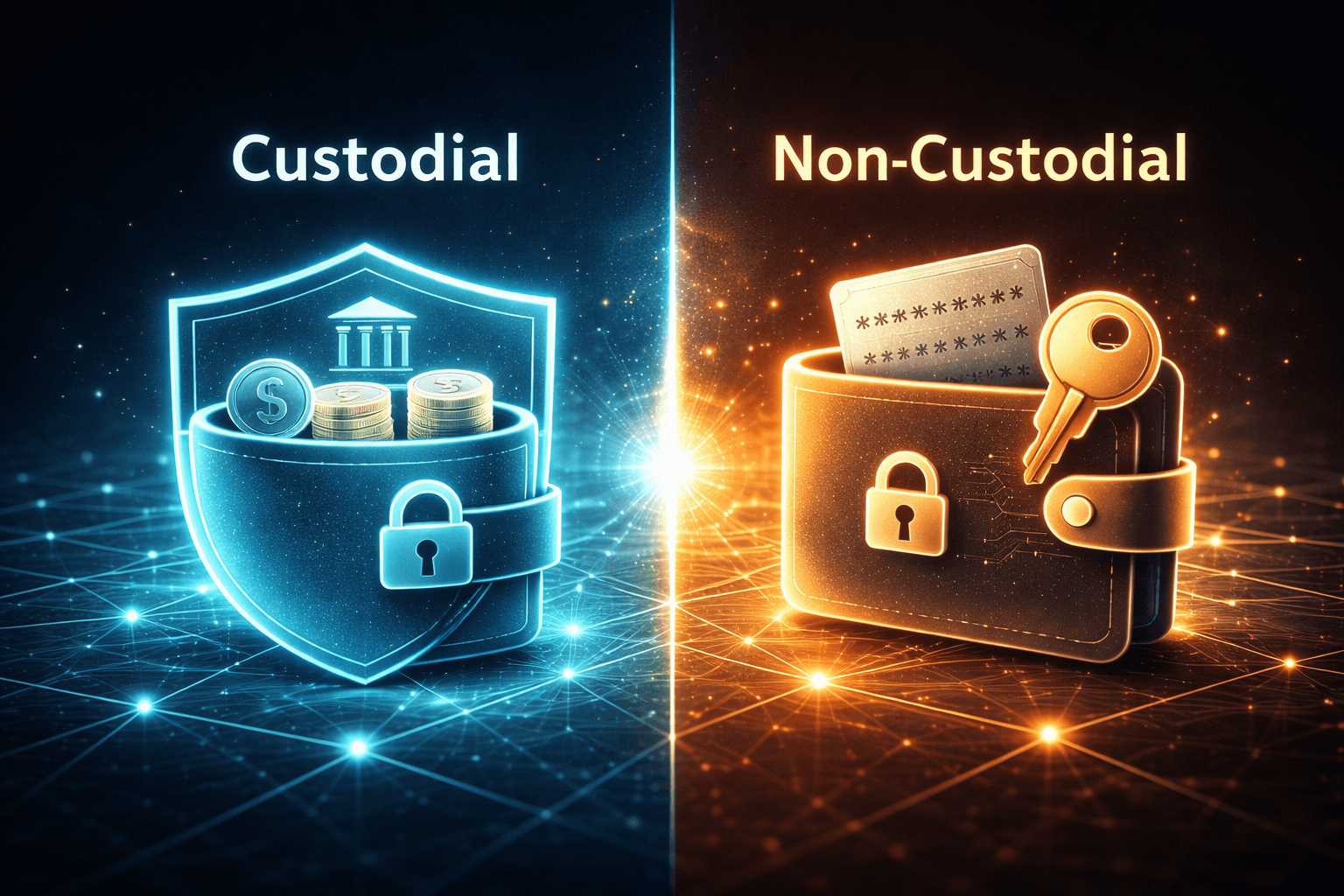
Custodial vs. Non-Custodial Wallets
Custodial wallets
A third party (usually an exchange) controls your private keys.
Pros: Easy to use, password recovery
Cons: You don’t fully own your crypto
Non-custodial wallets
You control your private keys directly.
Pros: Full ownership, better privacy
Cons: You are responsible for security and backups
This tradeoff is often summarized as ‘not your keys, not your crypto.’
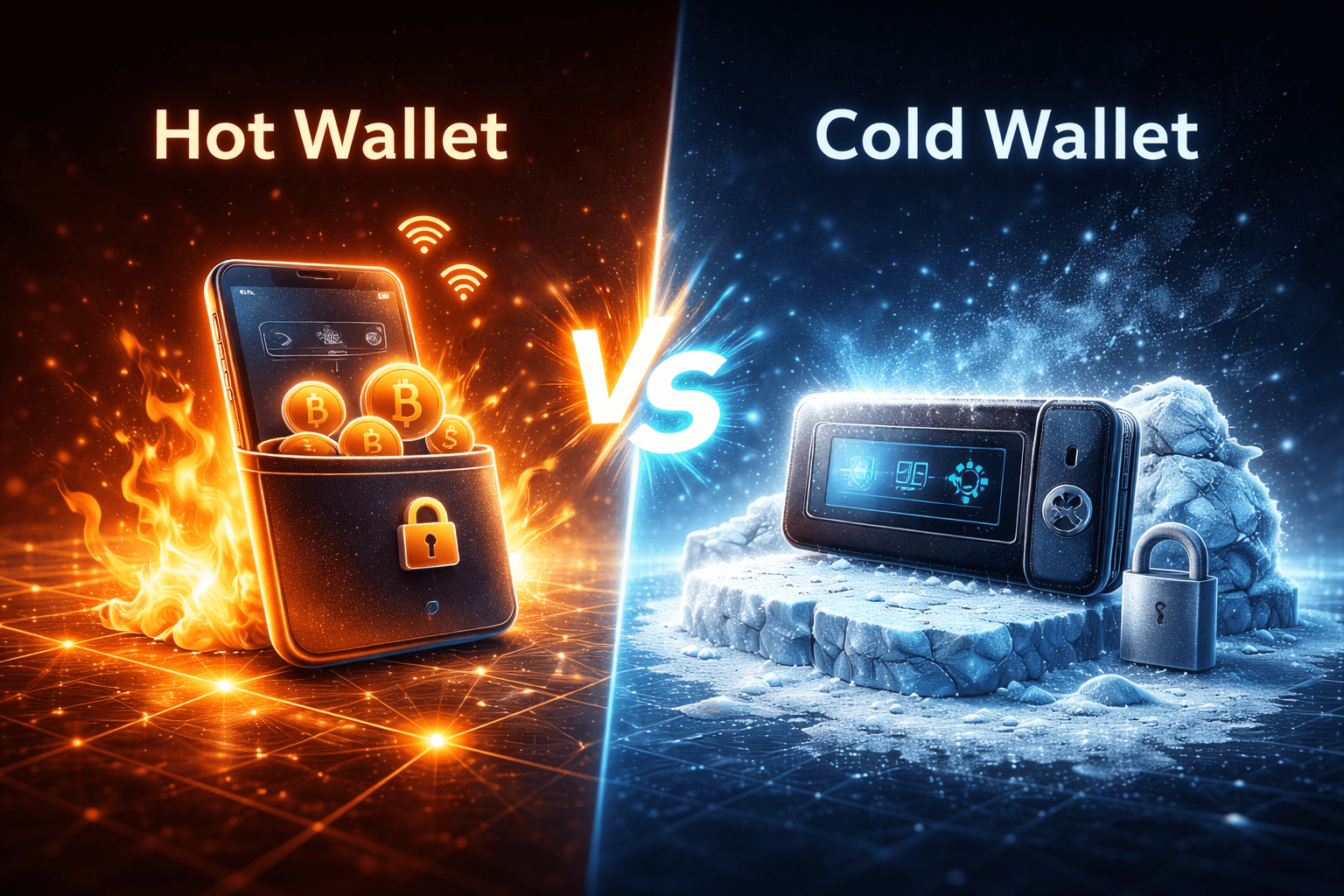
Hot Wallets vs. Cold Wallets
Hot wallets
Connected to the internet (mobile, desktop, web wallets).
More convenient
Higher exposure to online threats
Cold wallets
Kept offline (hardware wallets, paper backups).
Much more secure
Less convenient for frequent transactions
Most users eventually use both, depending on how often they transact.
Common Types of Crypto Wallets
Hardware Wallets
Hardware wallets are physical devices that store private keys offline.
Best for long-term storage
Resistant to malware and phishing
Require a device to approve transactions
They’re widely considered the most secure option for holding significant amounts of crypto.
Mobile Wallets
Mobile wallets are smartphone apps designed for everyday use.
Convenient for payments and transfers
Often support QR codes and biometrics
More exposed if the phone is compromised
Ideal for smaller balances and frequent transactions.
Desktop Wallets
Desktop wallets are installed directly on your computer.
More control than web wallets
Better suited for advanced users
Security depends on your computer’s health
They offer a balance between usability and control.
Web & Browser Wallets
Web wallets run in browsers or as extensions.
Popular for DeFi and NFT use
Easy access to decentralized apps
Higher phishing and scam risk
Users should be cautious and verify websites carefully.
Exchange Wallets
Exchange wallets are custodial wallets provided by crypto exchanges.
Very beginner-friendly
Easy buying, selling, and trading
Not ideal for long-term storage
They’re best viewed as temporary holding wallets, not personal vaults.
How to Choose the Best Crypto Wallet
The best crypto wallet depends on how you plan to use crypto, not on a single “best” option for everyone.
Security Features to Look For
Key security features include:
Private key ownership
Recovery phrase backups
PINs, biometrics, or passphrases
Open-source or audited software (when possible)
Security should always come before convenience for long-term storage.
Supported Cryptocurrencies & Networks
Not all wallets support every asset.
Check for:
Supported coins and tokens
Network compatibility (Ethereum, Bitcoin, Layer 2s, etc.)
NFT and dApp support if needed
Choosing the wrong wallet can limit what you can store or use.
Ease of Use & Accessibility
Especially for beginners, usability matters.
Consider:
Clear interface
Mobile vs. desktop access
Backup and recovery guidance
A wallet that’s too complex increases the risk of mistakes.
Are Crypto Wallets Safe?
Crypto wallets can be very safe – but only if used correctly.
Wallet safety depends on:
The wallet type
How keys are stored
User behavior
Most crypto losses happen due to human error, not wallet technology itself.
Best Practices for Keeping Your Crypto Secure
To reduce risk:
Never share your private key or recovery phrase
Store recovery phrases offline
Use hardware wallets for large balances
Double-check addresses before sending funds
Avoid clicking unknown links or signing random transactions
Good security habits are just as important as choosing the right wallet.
As crypto adoption grows, much of the wallet innovation happening today is focused on reducing this complexity without giving up security or control. Understanding the basics makes it easier to evaluate how newer wallet designs are trying to improve the experience.
Bottom line:
A crypto wallet is the foundation of owning and using cryptocurrency. Once you understand how wallets work and how to choose the right one, you’re equipped to interact with crypto safely and confidently on your own terms.



Get updates in your inbox
Get exclusive insights, actionable strategies, and ideas delivered straight to your inbox.